Posts filed under ‘Sociedade’
"DESTINOS TÍPICOS" PORTUGUESES (II)

Outrora distinguida com o título de “aldeia mais portuguesa de Portugal”, em Monsanto (Idanha-a-Nova, Castelo Branco), edificada em torno de penedos graníticos, o casario confunde-se com a paisagem rochosa envolvente; conserva vestígios arqueológicos de um castro lusitano e da ocupação romana do campo de São Lourenço.
De 1944 a 1948, nela exerceu clínica médica Fernando Namora.
A visitar, o Castelo templário (construído sob a orientação do Mestre Gualdim Pais), as igrejas de Santa Maria do Castelo, da Misericórdia e Matriz, a Torre de Lucano e o Pelourinho.
(ver também http://www.portugal.montranet.com/castelomonsanto/corpo.htm)
"DESTINOS TÍPICOS" PORTUGUESES (I)
Em tempo de férias, algumas sugestões para uns dias bem passados…
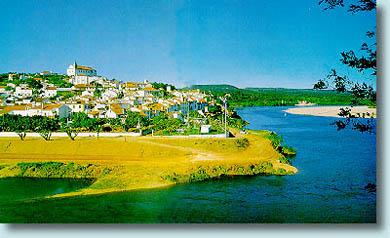
“Vila-poema”, situada na confluência dos Rios Tejo e Zêzere, Constância assistiu aos amores de Camões (por D. Catarina de Ataíde, apelidada de Natércia nos seus poemas), que aí viveu entre 1548 e 1550, tendo também albergado reis, como foi o caso de D. Sebastião.
A visitar, para além da casa onde viveu o poeta, a Igreja Matriz, o Museu dos Rios e Artes Marítimas, a Igreja da Misericórdia, o monumento a Camões e o Pelourinho.
São famosas as Festas de Constância, a 10 de Junho, as Pomonas Camonianas.
(vidé também http://www.cm-constancia.pt)
"THE ONE CAMPAIGN"
“Dear Friend:
We have great news! For 48 hours, you jammed phone lines on Capitol Hill to fight global AIDS and extreme poverty. And on Tuesday, because of the calls of over 23,000 Americans like you, the U.S. Senate voted $100 million more for life-saving efforts needed to fight three killer diseases.
Because of your help, we’ve moved one step closer to ensuring the Global Fund to Fight AIDS, TB and Malaria will continue life-saving efforts that deliver prevention, care and treatment to millions around the world. With passage of the Santorum-Durbin amendment, the Senate agreed that the U.S. should contribute a total of $600 million to the Global Fund next year. In the coming weeks, we’ll need the House of Representatives to also agree.
We’ve made some real progress together. Thank you for helping!
What does the Global Fund do with our crucial support? In Nigeria, tens of millions of doses of a new, highly effective malaria medication will be distributed. Can you believe that only 10,000 doses of this medication were available across all of Africa two years ago? In Mozambique, more than 55,000 people will receive life-saving AIDS treatment. These efforts help keep people alive long enough to grow up healthy, raise children and crops and build businesses and communities.
And back here at home, we can know that we’re doing more to fight global AIDS and extreme poverty. America’s contributions challenge other countries to do their share, as U.S. law requires that each dollar from the U.S. must be matched by two dollars from other nations. Even more, the Global Fund uses a system of checks and balances to fight corruption and ensure that funding really reaches those most in need-so that these efforts can have the power to transform the hopes of a generation.
Thank you for your help. Together as ONE, we are changing the world.
Thanks,
The ONE Team”
MELHORES COZINHEIROS EM PORTUGAL
A revista “24 Horas” promoveu um concurso para selecção dos 10 melhores cozinheiros em Portugal. O júri do concurso, constituído por David Lopes Ramos, Filipa Vacondeus, Francisco José Viegas, Helena Sacadura Cabral, José Nogueira Gil e Manuel Luís Goucha, estabeleceu a seguinte ordenação:
1º Miguel Castro e Silva (Bull & Bear – Porto)
2º Alice Marto (Tia Alice – Fátima)
3º Vítor Sobral (Terreiro do Paço – Lisboa)
4º Aimé Barroyer (Pestana Palace – Lisboa)
5º Júlia Vinagre (Bolota Castanha – Terrugem)
6º Fausto Airoldi (Bica do Sapato – Lisboa)
7º Augusto Gemelli (A Galeria Gemelli – Lisboa)
8º Francisco Meirelles (Sessenta Setenta – Porto)
9º Maria do Céu Elias (Chico Elias – Tomar)
10º Pedro Nunes (S. Gião – Moreira de Cónegos)
MENSAGEM DE WANGARI MATHAI
“Last week I was honoured to address many thousands of people campaigning to make poverty history in Edinburgh. I was touched and inspired by the number of people who were there and the millions more they represented in the UK.
I was proud to see the way people around the world are standing shoulder to shoulder with us in Africa to call for an end to extreme and dehumanizing poverty.
The strength of your voices and the actions you have taken has been a testament to the power of peaceful mass mobilisation. You have helped get the issues of extreme poverty onto the political agenda like never before.
Because of you, the G8 have taken the first steps on the road to ending injustices that lead to extreme poverty. There is still much of this difficult journey to complete – but the first steps are always the hardest to take.
You should be proud of what you have achieved – many people will live because of you.
Thank you
Professor Wangari Mathai”
Professor Mathai was the first woman from Africa to be honoured with the Nobel Peace Prize. She was awarded the prize in 2004 for her contribution to sustainable development, democracy and peace.
G8
Porque há “pequenos gestos” que vale(ra)m a pena:
“Dear Friend:
This is a big thank you to all 1.5 million of you who joined together as ONE to do something extraordinary.
From the 500,000 letters you sent to President Bush to Live 8 in Philadelphia to the G8 Summit in Gleneagles, you called on eight men to do more to fight global AIDS and extreme poverty, and they heard your call. In Scotland this past Friday, overcoming the shadow of a tragic day in London, President Bush joined G8 leaders in an unprecedented deal to cancel debts and double aid to Africa.
For African nations fighting poverty and corruption, this means a $25 billion increase in aid and wiping out 100% of their debts. With this funding, Africa can halve deaths from malaria, put millions of children into school, and 10 million people across the world will have access to lifesaving AIDS drugs. Behind each of these numbers is one person, one life that will be changed forever.
For the first time ever, everyday Americans like you joined together to take a seat at the negotiating table, asking the world’s most powerful leaders to do more to help the world’s poorest people. Because you signed the ONE Declaration, wore the white band and forwarded emails to friends about ONE, you made a huge step toward making poverty history. We’ve come so far and still have far to go.
Keep the momentum going, email 3 friends about ONE today.
This agreement is a real victory for Africa – but promises made of words will only become promises for a generation if we keep watching, asking and acting. Much more needs to be done in Washington DC to turn these commitments into lifesaving programs, and the world must take new steps to make trade fair. More meetings will take place this year in New York and Hong Kong where a comprehensive debt-aid-trade deal can be reached and end global AIDS and extreme poverty in our time.
We can be that great generation. As ONE, let’s keep up the positive pressure and make 2005 the year we joined together to make history.
Thank you,
The ONE Team
P.S. You can learn more about the details of the G8 deal by checking out the ONE.ORG G8 page.”
DESENVOLVIMENTO HUMANO (V)
A construção de uma sociedade mais justa exige a compreensão da importância das liberdades em geral, incluindo a liberdade cultural. É fundamental derrubar as barreiras da discriminação baseada na identidade cultural (étnica, religiosa ou linguística), reconhecendo as diferenças culturais, promovendo a participação harmoniosa dos diversos grupos culturais no processo de desenvolvimento.
Mas, a ideia fundamental é a de que nada mudará apenas com palavras… São necessárias acções concretas!
Os países ricos têm de apoiar os mais pobres; têm a palavra: George W. Bush (EUA), Tony Blair (Reino Unido), Jacques Chirac (França), Gerhard Schroder (Alemanha), Vladimir Putin (Rússia), Silvio Berlusconi (Itália), Junichiro Koizumi (Japão) e Paul Martin (Canadá).
O perdão da dívida internacional desses Estados é um primeiro passo.
Porém, o passo decisivo tem de partir dos próprios países que necessitam de apoio; é imperioso que adoptem novas práticas de governação, em que a corrupção não poderá ter lugar.
O TERROR VOLTA A ATACAR
Hoje, em Londres, no Metro – falando-se de 6 explosões -, ainda com um número indeterminado de vítimas.
Há quem pretenda desviar as prioridades para além da luta contra a pobreza no mundo e das questões ambientais…
P. S. Actualizando a informação: estão confirmados 4 atentados, três no Metro e um num autocarro, estimando-se cerca de 50 vítimas mortais de mais uma barbárie.
[2440]
DESENVOLVIMENTO HUMANO (IV)
Um pouco na linha da teoria de Max Weber de 1930 (sobre o papel decisivo da ética protestante no desenvolvimento com sucesso de um sistema capitalista industrial), escreveu Samuel Huntington no livro que publicou com Lawrence Harrison, “Culture Matters”, que, no início da década de 60 do século XX, os dados económicos do Ghana e da Coreia do Sul apresentavam uma similitude espantosa; menos de 30 anos depois, a Coreia do Sul tinha-se tornado num “gigante industrial”, com uma economia entre as 15 mais poderosas do mundo, empresas multinacionais, exportação de automóveis e equipamento electrónico.
Por seu lado, o Ghana passara a ter um PIB per capita correspondente a apenas 1/15 do dos sul-coreanos.
Como pode ser explicada esta extraordinária diferença de desenvolvimento?
Entre muitos factores, a cultura assume possivelmente um papel relevante, particularmente a forma como os coreanos valorizam o investimento, empenho no trabalho, educação, organização e disciplina.
DESENVOLVIMENTO HUMANO (III)
De acordo com o Relatório de Desenvolvimento Humano de 2004 das Nações Unidas, os países sofrendo de piores condições em termos de desenvolvimento humano são da:
– África Sub-Sahariana (21 países – Serra Leoa, Níger, Burkina Faso, Mali, Burundi, Guiné-Bissau, Moçambique, Etiópia, República Centro Africana, R. D. Congo, Chade, Angola, Malawi, Zâmbia, Costa do Marfim, Tanzânia, Benin, Guiné-Conacry, Ruanda, Senegal e Eritreia);
– a par de 3 Estados Árabes (Djibouti, Iémen e Sudão);
– 1 da Ásia Oriental e Pacífico (Timor-Leste);
– 1 do Sul da Ásia (Paquistão); e
– 1 da América Latina (Haiti);
integrando portanto 4 países de expressão oficial portuguesa.
Para além da situação destes 27 países – que deverá constituir uma prioridade mundial absoluta – há outros 27 em situação bastante precária: mais 17 da África Sub-Sahariana, 3 da Europa de Leste e ex-URSS (Tajiquistão, Moldávia e Quirguizistão), 3 Estados Árabes (Marrocos, Egipto e Argélia), 2 da Ásia Oriental e Pacífico (Laos e Papua-Nova Guiné), 1 do Sul da Ásia (Nepal) e 1 da América Latina (Guatemala).
Estes países necessitam urgentemente na nossa (também da sua!…) atenção.