Posts filed under ‘Media e Comunicação’

Jornal de Notícias – “Grande Aperto”
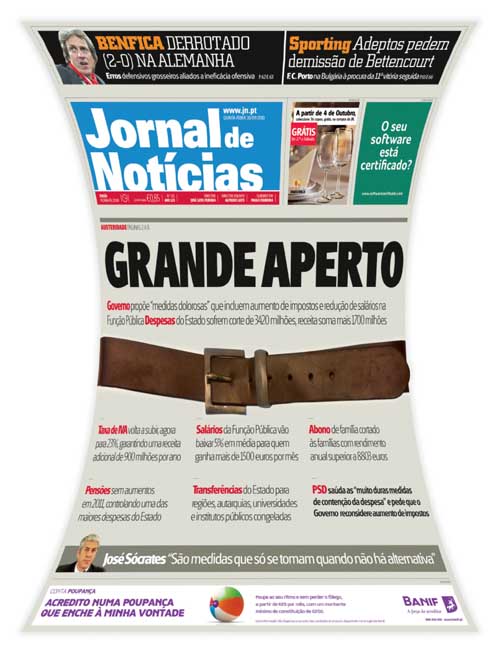
A propósito das medidas ontem apresentadas pelo Primeiro-Ministro, no âmbito da proposta de Orçamento de Estado para 2011.
The Best Magazine Articles Ever
Based on the number of times an article is recommended
********** Gay Talese, “Frank Sinatra Has a Cold.” Esquire, April 1966.
********* Hunter S. Thompson, “The Kentucky Derby is Decadent and Depraved.” Scanlan’s Monthly, June 1970.
********* Neal Stephenson, “Mother Earth, Mother Board: Wiring the Planet.” Wired, December 1996. On laying trans-oceanic fiber optic cable.
******* David Foster Wallace, “Federer As Religious Experience.” The New York Times, Play Magazine, August 20, 2006.
******* David Foster Wallace, “Consider the Lobster.” Gourmet Magazine, August 2004.
****** John Updike, “Hub Fans Bid Kid Adieu.” The New Yorker, October 22, 1960. About Ted Williams career framed by his last game. I read it every opening day without fail.
***** Hunter S. Thompson, “Fear and Loathing in Las Vegas: A Savage Journey to the Heart of the American Dream.” Rolling Stone. Part I: November 11, 1971; Part II: November 25, 1971.
***** Richard Ben Cramer, “What Do You Think of Ted Williams Now?” Esquire, June 1986.
**** Jon Krakauer, “Death of an Innocent: How Christopher McCandless Lost His Way in the Wilds.” Outside Magazine, January 1993. Article that became Into the Wild.
**** Susan Orlean, “The American Man at Age Ten.” Esquire, December 1992. [Ed.’s note: Not available in Esquire’s online archive, but you’ll find it with a little searching. Also republished in Orlean’s The Bullfighter Checks Her Makeupand Glass’s The New Kings of Nonfiction.]
**** Edward Jay Epstein, “Have You Ever Tried to Sell a Diamond?” Atlantic Magazine, February 1982. Diamonds, De Beers, monopoly & marketing.
**** Ron Rosenbaum, “Secrets of the Little Blue Box.” Esquire, October 1971. The first and best account of telephone hackers, more amazing than you might believe.
**** Tom Junod, “Can you say…”Hero”?” Esquire, November 1998. A profile of Mr. Rogers. [Ed.’s note: This article was also quoted in “Esquire’s 70 Greatest Sentences” published October 1, 2003.]
**** Michael Lewis, “The End.” Portfolio, November 11, 2008. Breaks down supposedly complex economic cause and effect into very engaging, easily understood analysis. Real life characters as interesting and entertaining as the best fiction. A must.
*** George Plimpton, “The Curious Case Of Sidd Finch.” Sports Illustrated, April 1, 1985. I remember being extremely angry (for a few minutes) that the Mets were going to get this guy instead of my A’s. I was an honest kid and man, it just seemed so unfair. When I realized it was a prank, I wasn’t as upset. Because I always thought this guy, in some form, would someday show up and blow away the Twins, the Angels, and the Giants wearing an A’s uniform. I’m still waiting!
*** David Foster Wallace, “Shipping Out: On the (Nearly Lethal) Comforts of a Luxury Cruise.” Harper’s Magazine, January 1996
*** Jon Krakauer, “Into Thin Air.” Outside Magazine, September 1996.
*** Tom Junod, “The Falling Man.” Esquire, September 2003.
*** Gene Weingarten, “The Peekaboo Paradox.” The Washington Post, Sunday Magazine, January 22, 2006. Story about the weirdest clown, the Great Zucchini, you’ll never want to meet. Keep reading….
*** David Foster Wallace, “Host.” Atlantic Magazine, April 2005.
*** Gene Weingarten, “Pearls Before Breakfast.” The Washington Post, Magazine, April 8, 2007. Joshua Bell is one of the world’s greatest violinists. His instrument of choice is a multimillion-dollar Stradivarius. If he played it for spare change, incognito, outside a bustling Metro stop in Washington, would anyone notice?
*** Chris Jones, “The Things That Carried Him.” Esquire, May 2008. It’s extremely moving without being saccharine or twee. It’s a military story, but utterly without jingoism or indictment. And it’s wonderfully observed.
*** Michael Lewis, “Wall Street on the Tundra.” Vanity Fair, April 2009. It’s an in depth analysis of the financial collapse of Iceland. Excellent. There are some great one liners (this isn’t actually one of them, but it’ll give you the idea): “This in a country the size of Kentucky, but with fewer citizens than greater Peoria, Illinois. Peoria, Illinois, doesn’t have global financial institutions, or a university devoting itself to training many hundreds of financiers, or its own currency. And yet the world was taking Iceland seriously.”
*** Gene Weingarten, “Fatal Distraction: Forgetting a Child in the Backseat of a Car Is a Horrifying Mistake. Is It a Crime?” The Washington Post, Magazine, March 8, 2009. Winner of the 2010 Pulitzer Prize in Feature Writing.
(via Ponto Media)
O futuro do papel – Enrique Dans
 «El futuro del papel es ya meramente coyuntural. Si cabe, como mucho, generacional: el papel durará hasta que aquellos que crecieron en un mundo en el que el papel era la forma más barata y eficiente de diseminar información se pasen finalmente a mejores métodos o, simplemente, desaparezcan. En una generación, la idea de cultivar bosques, talarlos, transportar la madera, someterla a complejos procesos de transformación física y química, imprimir con tinta sobre el producto y distribuirlo a los lectores se verá ya como lo que es hoy: un total y absoluto anacronismo.»
Arquivo Última Hora (Brasil) disponível online

«O Fundo Ultima Hora, parte do acervo do Arquivo Público do Estado de São Paulo, é composto por 166 mil fotografias, 500 mil negativos, 2.223 ilustrações e uma coleção de edições da Ultima Hora1 do Rio de Janeiro entre os anos de 1951 e 1970, em papel ou microfilme. A documentação foi acumulada ao longo da trajetória da edição carioca do jornal. O valor desse fundo é inestimável, pois as peculiaridades e riquezas da UH permitem que seja fonte para diversos tipos de estudo, tanto técnicos sobre design, jornalismo, ciências políticas e história .
Este site temático busca abarcar a diversidade tipológica do Fundo Ultima Hora, trazendo a público a coleção da edição carioca digitalizada, as ilustrações originais que compõem o Fundo e parte das reproduções fotográficas – neste momento, representadas pela coleção de negativos.»
Do jornalismo aos media
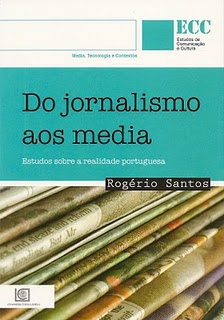 Da autoria de Rogério Santos, foi ontem lançada a obra “Do jornalismo aos media. Estudos sobre a realidade portuguesa”:
«O livro tem capítulos sobre história do jornalismo e dos media (imprensa, rádio e televisão) em Portugal, digitalização e novos media (edição, blogues e videojogos). Destaques para a análise do jornalismo na passagem do século XIX para o XX, sobretudo do percurso profissional de vários jornalistas com notoriedade no panorama cultural da época, a história dos primeiros dez anos do canal televisivo SIC e a análise de congressos dos partidos políticos através das notícias da televisão. A história, a sociologia do jornalismo e a etnografia, com recurso a análise de conteúdo e observação participante, foram as ciências convocadas para estes textos. Outros capítulos reflectem a investigação do autor sobre tendências e mutações dos media nacionais nos últimos 35 anos».
The World’s Best Countries – Infografia Newsweek
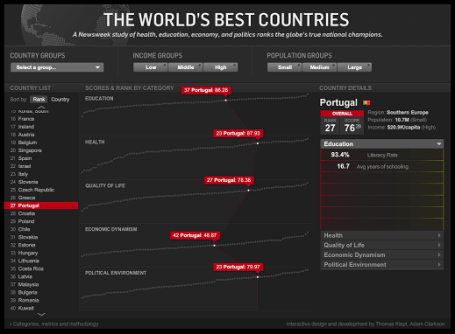
(infografia Newsweek)





 Memória Virtual