Posts filed under ‘Internacional’
Our capitalist system is near meltdown
In fact, the existence of the euro has, until now, been a bulwark against disaster. Suppose it had not been created and that the financial crisis in 2008 had broken over a Europe with multiple floating exchange rates and no European central bank – the eurosceptic utopia. The Irish, Portuguese, Greek, Spanish, Italian and French banking systems would have stood alone and they would have collapsed in a domino effect, interacting with the mega-crisis in Britain and the US. Even some German banks would not have been immune. There would have been a 1930s-scale slump, the break up of the EU and a rise in beggar-my-neighbour devaluations and trade protection.
[…]
We are living through the most dangerous confluence of economic circumstances in modern times. Trying to pretend the interdependencies do not exist or that the collapse of the euro is the answer can only make matters worse. It is a straight choice: we do all we can to help each other or risk going down in what could be the worst economic contraction for a century.
Jacques Delors furieux
Invité de RTL, l’ancien président de la Commission européenne a vigoureusement dénoncé les divisions affichées entre les ministres des Finances de l’Eurogroupe. “J’avais dit il y a trois semaines que l’euro était au bord du groupe”, explique t-il, “je suis malheureux d’avoir eu raison”.
“Hier soir, les 17 ministres des Finances n’ont pas pu se mettre d’accord, alors qu’ils sont sur un paquebot en pleine tempête”, dénonce t-il.
Fervent européen, Jacques Delors conclut l’entretien avec une note plus grave. “J’ai honte”, déclare t-il. “Ce qu’ils ont fait hier illustre la misère des politiques, ça a porté un coup terrible à tous ceux qui, depuis 1948, s’attachent à avoir une vision d’une Europe en paix et d’une Europe prospère”.
(Jacques Delors, antigo Presidente da Comissão Europeia, em entrevista à RTL)
Does the Euro Have a Future?
There is some similarity between the euro crisis and the subprime crisis that caused the crash of 2008. In each case a supposedly riskless asset—collateralized debt obligations (CDOs), based largely on mortgages, in 2008, and European government bonds now—lost some or all of their value.
Unfortunately the euro crisis is more intractable. In 2008 the US financial authorities that were needed to respond to the crisis were in place; at present in the eurozone one of these authorities, the common treasury, has yet to be brought into existence. This requires a political process involving a number of sovereign states. That is what has made the problem so severe. The political will to create a common European treasury was absent in the first place; and since the time when the euro was created the political cohesion of the European Union has greatly deteriorated. As a result there is no clearly visible solution to the euro crisis. In its absence the authorities have been trying to buy time.
In an ordinary financial crisis this tactic works: with the passage of time the panic subsides and confidence returns. But in this case time has been working against the authorities. Since the political will is missing, the problems continue to grow larger while the politics are also becoming more poisonous.
[…]
To resolve a crisis in which the impossible becomes possible it is necessary to think about the unthinkable. To start with, it is imperative to prepare for the possibility of default and defection from the eurozone in the case of Greece, Portugal, and perhaps Ireland. […]
Riscos catastróficos
El secretario del Tesoro de Estados Unidos, Timothy Geithner, ha afirmado hoy que está preocupado por las divisiones que existen entre los países e instituciones europeas acerca de cómo afrontar la crisis de deuda y, en especial, por las diferencias que ha encontrado entre los gobiernos y el Banco Central Europeo. Precisamente, el presidente de este organismo, Jean-Claude Trichet, ha defendido hoy que es preciso pasar de las palabras a los hechos para frenar las turbulencias y evitar “los riesgos catastróficos”.
(El País)
Time is running out
[…] There is a sense in Brussels that the defenders of the euro zone have run out of ammunition and out of ideas.
One reason is that the politicians cannot keep up with the markets. The euro zone has yet to implement the decisions of July’s summit, but the next shock wave has already struck. Another is that the performance of Greece under the EU-IMF programme has been so poor that every quarterly assessment to approve the next tranche of loans becomes a cliff-hanger.
So each episode of market panic is worse than the previous one, the weapons in hand look inadequate, contagion spreads, while governments and institutions lose their nerve.
Liderança
En matière de leadership, nous sommes dans le scénario de l’ouragan Katrina : une déferlante meurtrière, et des discussions sans fin entre le Maire de la Nouvelle Orléans, le Gouverneur de la Louisiane et l’administration fédérale. Ce fut une catastrophe.
(Europe: les gouvernements sont-ils impuissants? – Le Monde – Blogs)
As Europe struggles to reverse a plunge in financial confidence, the world waits for Germany’s chancellor, Angela Merkel, to make a fundamental choice. She, more than any other European politician, will have to either summon the leadership to rescue the euro or concede that the political will is not there.
(German Leader Faces Key Choices on Rescuing Euro – The New York Times)
L’Europe a besoin d’architectes, pas seulement de pompiers ! Personne ne peut se satisfaire du bricolage institutionnel auquel nous avons assisté cet été pour sauver l’Italie et l’Espagne de la crise de leur dette.” La maire de Lille se dit “convaincue que tôt ou tard nous devrons émettre des euros-obligations, pour créer un grand marché financier de la dette européenne”.
(Martine Aubry propose la création d’une banque publique européenne – Le Monde)
9/11 – 10 anos
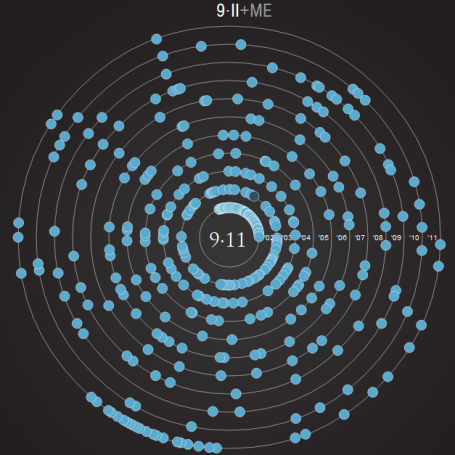
(10 anos do 11 Setembro, vistos através de uma excelente infografia do USA Today)

Pode ver também arquivos dos programas de televisão do dia 11.09.2001, em “tempo real”, e aceder a uma aplicação especial para iPad.
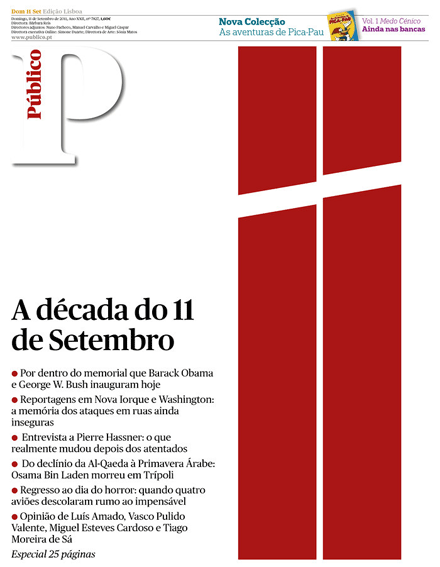
P.S. 25 das melhores primeiras páginas a propósito do 10º aniversário do 11 de Setembro, com destaque para a do Público.
Médias 19
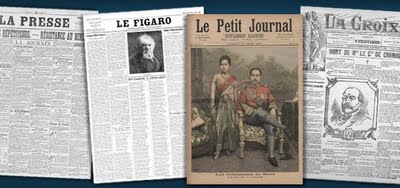
O site Médias 19, lançado em França, dedica-se à cultura mediática e jornalística no século XIX, reeditando textos da época anotados, nomeadamente textos sobre jornalismo.
19.08.1991 – O princípio do fim da URSS
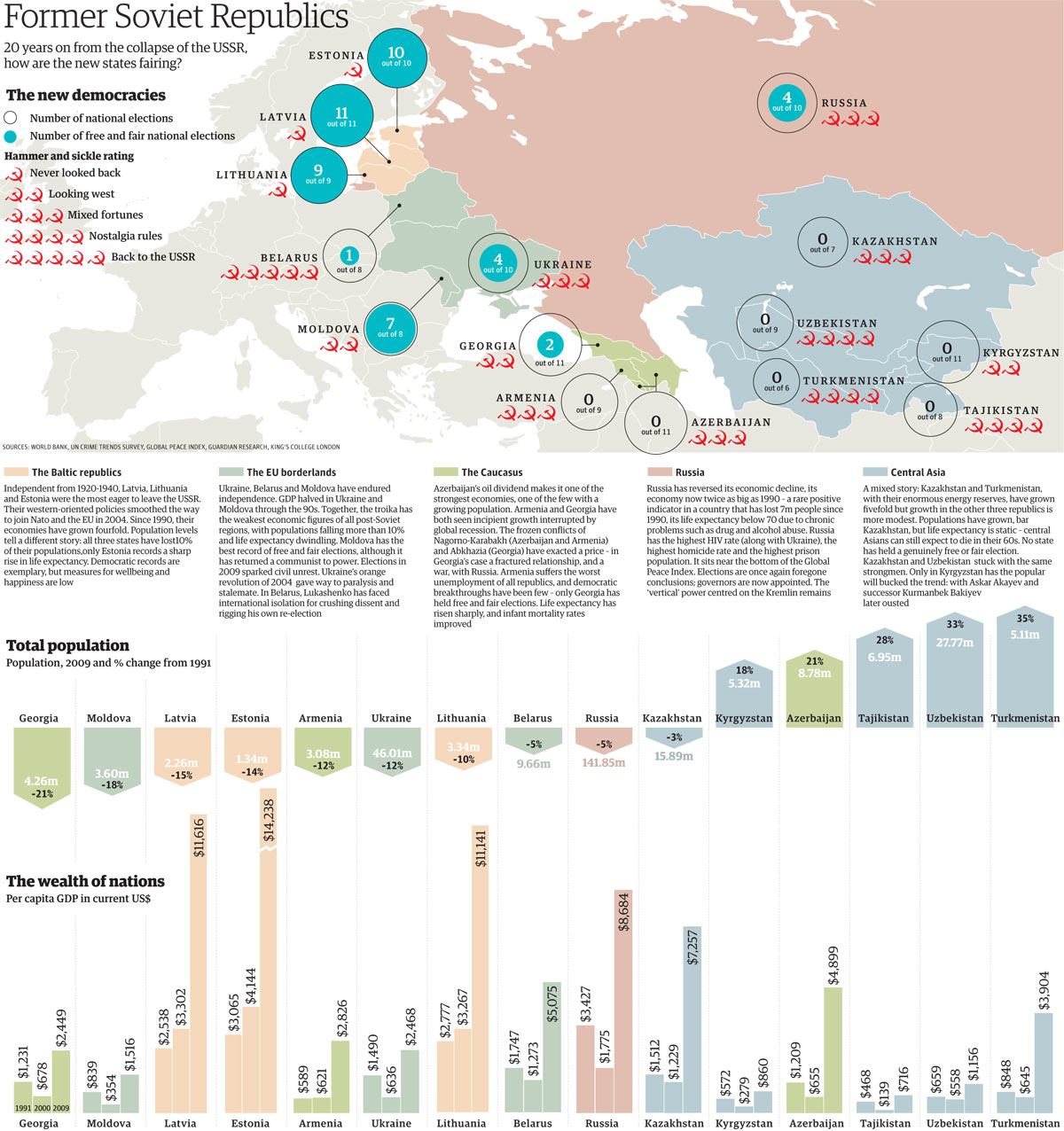
Há precisamente 20 anos, uma tentativa (não obstante falhada) de golpe de Estado ditaria o princípio do fim da URSS.
(clicar na imagem para ampliar) – A ler, também via The Guardian, o dossier especial, incluindo nomeadamente:
50 anos da construção do Muro de Berlim
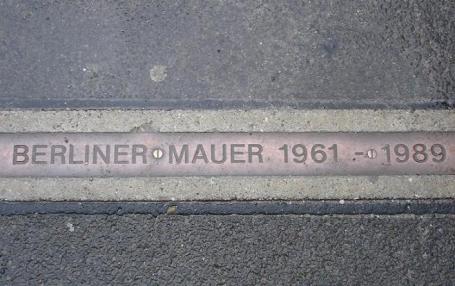
A propósito do Muro de Berlim, pode consultar aqui os artigos publicados aquando do 20º aniversário da sua queda





 Memória Virtual